

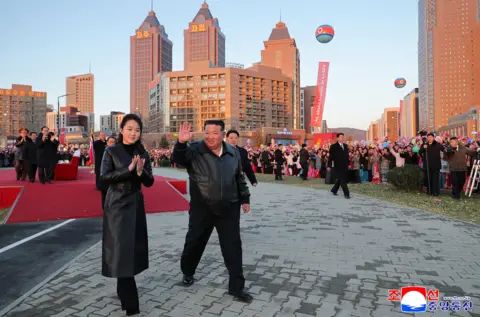
While warnings against Seoul and promises to develop the nuclear weapons programme, a central question hovered at the ongoing political assembly: would the leader's 13-year-old child be designated as the heir?
Even though conclusive news failed to materialise at the event, it has sparked a significant debate about the young girl's viability as the future ruler of the 25 million country, a dictatorship only ever governed by the Kim dynasty.
Heightened Public Profile and Rumors
The girl has become progressively present in official broadcasts with her parent. Yet, a great deal about her continues to be shrouded in mystery. Pyongyang has not once publicly published her full name or confirmed her date of birth.
Her existence was originally made known to the world in 2013. Over the years, she is widely believed to be a teenager, based on analyst reports.
Evidence of Succession
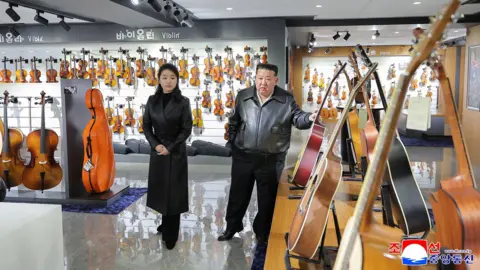
Analysts note several key clues. Her prominent public sightings—frequently positioned in the frame—and the use of reverential titles typically reserved for the ruler are seen as compelling indicators.
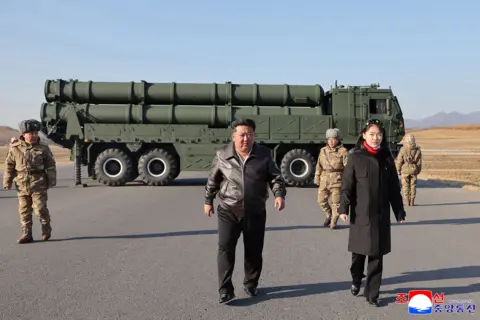
Furthermore, her familiarity with the military is viewed a further crucial element. She has inspected soldiers and missiles together with her father. On several occasions, high-ranking generals have been observed stopping next to her to whisper at military displays.
"The state media is using terminology set aside for the leader. It highlights her own iconic image," says one prominent expert.
Such martial exposure is deemed crucial, as supreme control in North Korea rests with dominance over the army. To be a credible successor, she must present herself as a authoritative commander.
Controversy Over Gender and Custom
Nevertheless, a substantial counter-argument persists. Some former officials contend that North Korea's profoundly male-dominated culture presents an insurmountable hurdle for a female leader.
It is noted that females at every rank face difficulties for fair treatment. Women officials in top roles are extremely uncommon. Common practices also demonstrate these biases.
"In such cases, they end the trip then go to the back of their car and spit three times to ward off the bad luck," describes a ex- North Korean official.
Evolving Societal Landscape
Alternatively, other analysts contend that the status of females in North Korea has transformed significantly since the economic collapse.
In that crisis, as the public sector faltered, women often became the main entrepreneurs, turning to informal business. This has apparently led to a slow shift in societal dynamics.
A scholar who has interviewed over 120 escapees states that it is now no longer uncommon to see females in administrative positions within the regime.

"We must not analyze North Korea with our logic. We must see them as the ancient kingdom," says the analyst. "What person would presume oppose an individual of Kim blood who is assuming the throne?"
Succession Calculations
Recent party moves are also being watched. The elevation of Kim Yo Jong, the leader's sister, to a influential propaganda position is seen by some as a step to establish a protector for the potential heir.
Ultimately, observers are split. Some view the focus on Ju Ae as a deliberate move to improve the leader's reputation and normalize another hereditary transfer of power. Others maintain the evidence of her training are sufficiently strong to overlook.
Either way, the speculation itself may serve a purpose for the regime, maintaining global attention firmly trained on the secretive Kim family rule.


